
Self-Talk and Residual Self-Image
My self-talk is typically pretty brutal.
Let’s dig into that first:
Self-talk isn’t really just subvocal speech in one’s head, it’s more than that. There’s observation, reflection, judgement, and criticism to start, and while those are useful when paired with compassion, patience, understanding, and kindness, they are a brutal weapon on their own. More often than not, this self-deprecation¹ causes a defensive emotional reaction rather than a rational behavioral adjustment.
This tracks with how I would behave if it was other-talk, jumping to my defense instead of taking a step back and considering what they had to say (remember, this is the brutal weapon without being guided by patience yada yada). The difference is social and value-based limitations on how we speak to others. We (hopefully) think about the emotional impact what we say might have on the people we say it to.
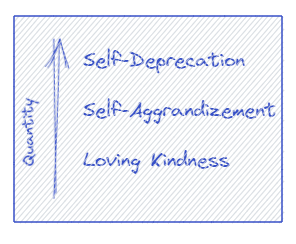
That being said, there is always a flip side. The inverse of this would be self-aggrandizement, having self-love, compassion, patience, and kindness without the correcting influence of reflection et. al, and can be just as dangerous.
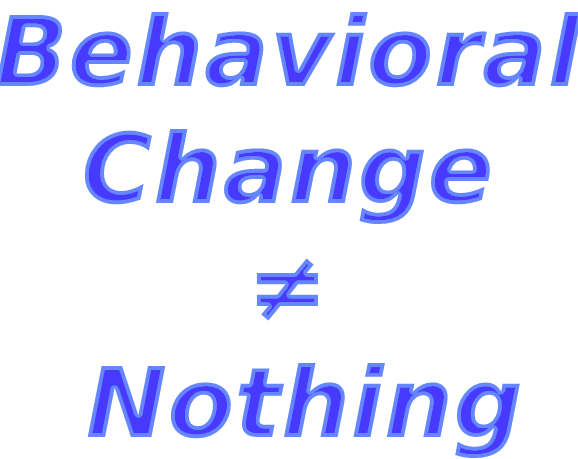
If I would estimate there is more deprecation than aggrandizement than loving-kindness. I can’t conflate the center-point with the sum of the other two, as they don’t truly merge into some fantastical, blessed union of oneness. Rather, they cancel each other out, the pro/con list of one is the inverse of the other, leaving nothing behind. But behavioral change ≠ nothing, so what gives?.
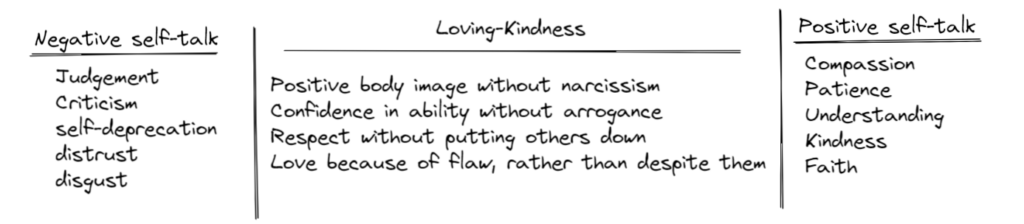
- Loving-Kindness
- Allows pride in ones accomplishments without hoarding credit
- Allows a clearer picture of ones role in the world and how to better serve the interest of all
- Retains responsibility for that with should be kept, while not burdening ourself with fault or blame
- Promotes growth by spotting behavioral patterns that don’t align with our values and suggests alternatives without judgement harming self-worth
- Promotes self-confidence and self-trust by pointing out our victories and positive impacts
- Self-Deprecation
- Conditions a defensive response from any criticism, including self-talk.
- Promotes deceit, manipulative, and untrustworthy behavior
- Promotes an internal atmosphere of mistrust,
- If one can’t trust themselves or their internal observations, how can they expect to trust anything external?
- Self-Aggrandizement
- Artificially inflates ego
- Blinds one to their own faults
- Assigns personal responsibility to externals despite evidence to the contrary
“I’m not trying to preach…”
– Famously Spoken Following Many Sermons
I’m building my understanding as I write, think of this as more of a observational treatise, articulating my thoughts as they form. I’m not trying to preach some kind of dogmatic truth that must be followed to the letter.
There are rather few things in my experience that can truly be placed on a linear spectrum. Much like autism , personality, temperament, morality, etc. there are dozens of shades and flavors that create the gestalt end-result.
- that’s as close a term I can get to without more than one hyphen